
Author

Joseph L. Smallwood

Browsing

Key Takeaways

  • Round dining tables are commonly used in compact homes because they reduce sharp corners and improve movement flow.
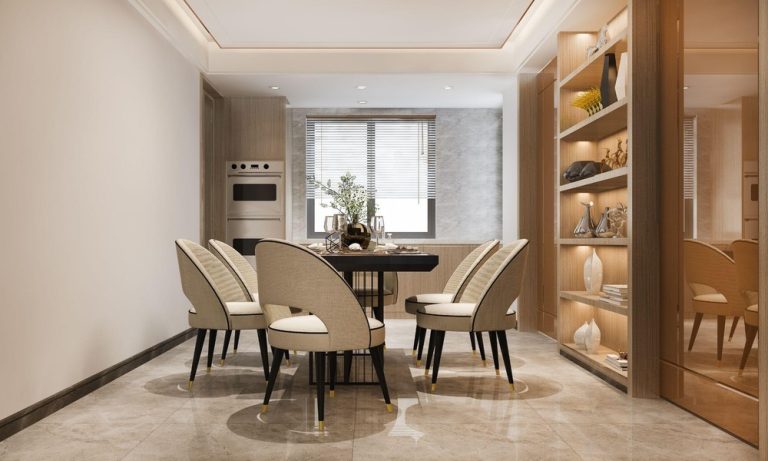
  • Many homeowners choose circular tables as part of their dining furniture for small space planning due to their flexible seating arrangements.
  • Smaller dining layouts often benefit from round tables because they create a more balanced visual appearance.
  • Visiting a furniture showroom can help homeowners compare table sizes, pedestal bases, and seating configurations more accurately before purchase.

Introduction

Smaller homes often require more careful furniture planning, especially in dining areas where movement space is limited. After all, in apartments, condominiums, and compact flats, dining furniture must fit comfortably without disrupting walkways or making rooms feel overcrowded. This is one reason round dining tables are frequently recommended for compact interiors. Unlike rectangular tables, circular designs offer different spatial advantages that can improve functionality in tighter layouts.

That said, when selecting dining furniture for small space interiors, homeowners usually consider seating capacity, traffic flow, flexibility, and visual proportion. Round dining tables address several of these concerns simultaneously. Many interior designers and furniture retailers continue to recommend them for homes where every square metre matters.

1. Improved Movement Around Tight Spaces

One of the main reasons round dining tables work well in smaller homes is the absence of sharp corners. For instance, in compact dining areas, rectangular or square tables can create tighter walking paths, especially near walls, kitchen counters, or entryways. Corners may also interrupt movement when several people are using the space at the same time.

Round tables create smoother circulation because their curved edges reduce obstruction. This instance allows residents to move around the dining area more naturally without constantly adjusting their path. Remember, in homes with narrow layouts or open-concept floor plans, this can make a noticeable difference in day-to-day use.

This design feature is especially useful in smaller apartments where dining areas often overlap with living rooms or kitchen spaces. Many homeowners searching for dining furniture for small space layouts prioritise pieces that support better mobility while still providing enough seating capacity.

2. Better Seating Flexibility

Another reason round dining tables are commonly recommended is their flexibility in accommodating different seating arrangements. Unlike rectangular tables, which have fixed corners and defined seating positions, round tables allow chairs to be placed more freely around the perimeter.

This flexibility becomes practical during gatherings or family meals where seating needs may change regularly. Remember, in smaller homes, furniture often needs to adapt to different situations without taking up additional space. A round table can sometimes accommodate an extra person more easily because there are no corners restricting chair placement.

Pedestal-style round tables further improve seating flexibility by removing table legs from the corners. This instance creates more legroom underneath and reduces positioning limitations for chairs. Homeowners visiting a furniture showroom in Singapore often compare pedestal and four-leg designs to determine which layout works better for their available floor area.

3. A More Balanced Visual Appearance

Furniture scale plays a major role in how spacious a room feels. Large rectangular dining tables can sometimes dominate compact interiors because their long edges emphasise the room’s limitations. Round dining tables create a softer visual profile that can make smaller spaces appear less rigid and crowded.

The circular shape helps distribute visual weight more evenly across the room. This quality contributes to a more balanced appearance, especially in dining areas integrated into living spaces. Interior designers frequently use curved furniture shapes to reduce the boxed-in effect that smaller rooms sometimes create.

Round tables also pair well with minimalist interior styles commonly found in urban apartments. Their shape can soften straight architectural lines and create a less cluttered visual environment. Remember, for homeowners exploring dining furniture for small space options, visual proportion is often just as important as functionality.

4. Suitable for Multi-Functional Dining Areas

Many smaller homes no longer use dining areas solely for meals. Dining tables are now commonly used for remote work, studying, meetings, or household tasks. Due to this, flexibility and space efficiency have become increasingly important when choosing furniture.

Round dining tables adapt well to multi-functional use because they encourage shared access from all sides. This layout supports conversation, collaboration, and temporary workspace arrangements without creating fixed “head” positions commonly associated with rectangular tables.

Additionally, smaller round tables can often fit more naturally into transitional spaces between kitchens and living rooms. This instance makes them easier to integrate into compact floor plans where furniture needs to serve several purposes throughout the day.

Conclusion

Round dining tables continue to be recommended for smaller homes because they improve movement flow, provide flexible seating arrangements, create better visual balance, and support multi-functional living spaces. Their shape allows compact interiors to remain functional without making rooms feel heavily crowded.

That said, for homeowners comparing layouts and furniture dimensions, visiting a furniture showroom in Singapore can provide a clearer understanding of how different round table sizes fit into smaller dining environments. Careful planning remains important when selecting dining furniture that balances practicality, comfort, and spatial efficiency.

Contact Cellini to find the right dining setup for your compact home today.

Static infographic images lose engagement on mobile and hurt page speed, but animated SVG infographics reveal themselves as readers scroll and weigh far less than the PNG screenshots they replace.

Infographics have a reputation among bloggers for being a lot of work that occasionally pays off enormously. When one lands, it can earn backlinks for years, get embedded on other people’s sites, and keep readers on the page far longer than a block of text ever would. When it flops, it is a heavy image that sat there and did nothing. The difference between those two outcomes is partly the content, but it is increasingly about the format itself, because the way readers consume infographics has changed and most WordPress sites have not kept up.

This post is about the practical side of getting infographics onto a WordPress site: why they are still worth making, where the classic static-image approach quietly fails, and what the options actually are if you want an infographic that moves, responds, and survives on a phone.

Why infographics still earn their keep

It is worth being clear about why anyone bothers, because the effort is real. A good infographic does three things that plain text struggles to. It compresses a complicated relationship into something a reader grasps in seconds. It gives other site owners a reason to link to you and embed your work, which is one of the few genuinely durable link-building tactics left. And it holds attention, because a reader who is decoding a visual is a reader who has stopped scrolling.

Those are not small benefits. Dwell time and earned links are exactly the signals that correlate with content that ranks and keeps ranking. The catch is that all three benefits assume the reader actually engages with the thing, and that assumption is where the standard approach falls down.

The trouble with the static infographic image

For most of the last decade, an infographic on WordPress meant one thing: a tall PNG or JPG that you exported from a design tool and dropped into a Media block. It works, in the sense that it appears on the page. But it carries a stack of problems that have only gotten worse as traffic shifted to mobile.

The first is sheer weight. A detailed infographic image is often several hundred kilobytes, sometimes more than a megabyte, and that lands directly on your largest contentful paint. You are trading page speed for a picture.

The second is mobile. A tall infographic designed at desktop width either shrinks until the text is unreadable or forces an awkward pinch-and-zoom that most readers will not bother with. The carefully chosen labels and the flow you designed simply do not survive the trip to a small screen, because there is nothing to reflow. It is one flat image.

The third is that a static image is, by definition, finished. It cannot reveal itself step by step, it cannot let a reader explore a section, and it gives a screen reader nothing but whatever alt text you remembered. The reader takes it in at a glance or not at all, and “at a glance” is usually what wins.

What changes when an infographic moves

An animated or interactive infographic solves the engagement problem at its root. Instead of presenting the whole picture at once and hoping the reader lingers, it reveals itself as they scroll, building one section at a time so the eye follows the structure you intended. That motion is not decoration. It is pacing. It walks the reader through the argument in the order you designed, and because the brain is wired to track movement, it earns the pause that a static image has to beg for.

> The short version: Animated infographics that reveal as you scroll earn three minutes of dwell time instead of a forty-second glance, and Scrollchart’s SVG approach reflows on mobile while loading lighter than any static image.

Interactivity layers more on top. When a reader can hover a segment for detail, step through a sequence, or watch a process play out, they are doing something rather than glancing. That participation is what turns a forty-second visit into a three-minute one, and it is what makes someone more likely to embed your infographic on their own site, because a living visual is more worth sharing than a screenshot.

The fear is always that this means a heavy, slow page. It does not have to. The trick is the rendering technology. An infographic built as lightweight SVG is just markup, so it scales crisply on any screen, reflows for mobile, animates with CSS instead of a bulky runtime, and stays accessible because every element lives in the DOM where a screen reader can find it. Built this way, an animated infographic can weigh a fraction of the static image it replaces while doing considerably more work.

The plugin and embed options for WordPress

So how do you actually get one of these into a post? There are a few routes. You can build an interactive infographic by hand in code and embed the markup through a Custom HTML block, which gives you total control and a fair amount of work. You can use a page-builder element if you live inside Elementor or WPBakery, accepting the lock-in and weight that come with it. Or you can use a plugin built specifically for animated infographics, which is the path that keeps you inside the WordPress editor without forcing you to hand-roll SVG.

The plugin route is worth a closer look because it removes the friction that kills most infographic ambitions, which is the back-and-forth between a separate design tool and your editor. A free WordPress infographic plugin of this kind installs from the official directory the usual way, then lets you pick a diagram from a catalogue, preview it live, and adjust colours and theme without leaving the post. It exposes the same picker through a Gutenberg block and a shortcode for the Classic Editor, so it fits whether your site is on the modern block editor or still on Classic. The infographics render as small SVG files, defer-load below the fold to protect your Core Web Vitals, and follow light or dark theme automatically.

Picking the approach that fits

If you make infographics rarely and want absolute control over every pixel, hand-built SVG embeds are fine, just budget the time. If you are deep in a page builder already, its element will be the path of least resistance. But if you make visual content regularly and want infographics that animate on scroll, reflow on mobile, and stay light enough not to wreck your speed score, a dedicated animated-infographic plugin is the one that removes the most friction for the least cost. The static image was never the only option, and on a phone-first, speed-sensitive web it is rarely the best one anymore. To get a feel for the range of diagram and infographic styles on offer, the free catalogue at Scrollchart is open to browse, with everything free for commercial use.

Frequently asked questions

Why do animated infographics perform better than static images?

Motion draws the eye and signals importance to readers, causing them to pause and engage rather than glance. Animated infographics reveal themselves as readers scroll, pacing the information and building dwell time. This is why animated infographics earn more backlinks and shares than their static equivalents.

Will animated infographics slow down my WordPress site?

No, not if they are built as lightweight SVG. Scrollchart infographics are typically a fraction of the file size of static images, defer-load below the fold to protect your largest contentful paint metric, and animate with CSS rather than a heavy JavaScript library.

How do I add interactive infographics to WordPress without code?

A dedicated WordPress plugin like Scrollchart lets you browse a catalogue, pick an infographic or diagram, and drop it into any post through a Gutenberg block or shortcode. No design tool, no Custom HTML, no back-and-forth. The plugin handles SVG rendering and responsive reflow automatically.

What defines combination results?

Three cubes generating a finite range of totals define every verdict within a sic bo cycle. Each possible arrangement determines how active betting zones resolve, making cube configuration type the single most important factor in outcome interpretation within the app tài xỉu online.

Outcome interpretation in sic bo requires familiarity with how different cube arrangements interact with available betting zones. A figure that resolves favourably for one field may simultaneously void another, meaning the same cube pattern carries different implications depending on which participant holds the pick within that cycle. Examining how distinct arrangement types compare against each other in terms of probability, coverage, and verdict implications provides a clearer framework for interpreting what each actually reveals across successive play periods.

Unique arrangements vs repeated values

Unique cube patterns, where all three pieces show different face values, represent the most frequently occurring configuration type across sic bo cycles. These patterns cover the broadest portion of the possible outcome space, meaning betting fields built around total sums and high-low ranges resolve most commonly against unique arrangement verdicts.

Repeated face value configurations, where two or all three cubes show identical values, occur with lower frequency but carry distinct verdict implications. Double patterns activate specific betting fields that unique arrangements cannot resolve, while three-of-a-kind configurations simultaneously produce the highest-specificity outcomes available and void high-low picks entirely. Participants holding high-low wagers alongside identical-set bets within the same cycle experience this configuration interaction directly at the point of reveal.

Mid-range totals vs extreme totals

Combined figures falling within mid-range bands appear with considerably greater frequency than those producing extremely high or low totals. This distribution reflects the mathematical properties of three-cube patterns, where more unique arrangements produce mid-range sums than those capable of generating figures at the outer edges of the possible total range.

Extreme total verdicts occur less frequently precisely because fewer cube patterns produce those sums. Betting fields targeting extreme figures carry payout structures reflecting this lower probability, creating a direct relationship between arrangement frequency and associated returns. Mid-range picks resolve more frequently against lower payouts, while extreme wagers produce less frequent verdicts against higher payout potential, contrasting these two configuration zones, a defining feature of total sum interpretation.

Specific full match vs any full match

Specific full-match picks require identifying the exact face value appearing across all three cubes simultaneously. With only one arrangement satisfying each specific condition, these represent the lowest probability configurations within the format and carry payout structures reflecting that rarity accordingly.

Any full-match picks cover all possible uniform readings without requiring face value specification, broadening coverage across the identical-set space at the cost of lower individual payout potential. Both share one defining characteristic, separating them from all other arrangement types, uniform readings void high-low picks regardless of whether the combined figure would otherwise fall within the chosen range, affecting how multiple active fields resolve simultaneously.

Cube configuration type shapes every verdict interpretation within a sic bo cycle. Recognising how different arrangements interact with active betting fields produces clearer outcome reading across successive play periods.

Key Takeaways

  • A Buddhist funeral focuses on the transition of the soul and the accumulation of merits to aid the deceased in their journey toward rebirth.
  • Families typically choose between three, five, or seven-day wakes held at HDB void decks or funeral parlours to allow for chanting and visitation.
  • Coordinating with experienced funeral directors ensures that the setup adheres strictly to specific denominational traditions and religious customs.

Introduction

Organising a final farewell within the Buddhist tradition requires a deep respect for spiritual rituals and a clear understanding of the logistics involved in a multi-day event. In Singapore, families often find themselves balancing emotional grief with the practical demands of religious compliance and venue booking. A Buddhist funeral serves as a solemn occasion to assist the deceased in their transition to the next life through prayer, merit-making, and symbolic offerings. By focusing on the values of impermanence and compassion, the service provides a structured environment where friends and relatives can pay their respects while contributing to the spiritual well-being of the departed. The family can focus on mourning while the ceremonial details are in capable hands when they leave these requirements to a professional.

Rituals, Chanting, and the Altar Arrangement

The heart of the ceremony lies in the chanting sessions led by monks, which typically occur on the first night, the final night, and during the funeral procession. These chants invoke blessings and help the deceased detach from worldly ties, facilitating a smoother transition. Families must coordinate with Buddhist funeral services in Singapore to arrange for monks from the specific denomination of the deceased, whether it be Mahayana, Theravada, or Tibetan. The setup involves a central altar featuring a portrait of the deceased, an image of the Buddha, and various offerings such as fruits, flowers, and incense. These elements create a dignified focal point that guides the atmosphere of the wake and provides a space for visitors to offer their own prayers and reflections.

In addition to the spiritual chanting, the physical arrangement of the wake area plays a vital role in the comfort of the attendees. Most wakes take place over an odd number of days, usually three or five, and require adequate seating, refreshment areas, and clear signage. Professional providers of Buddhist funeral services in Singapore handle the installation of the tentage at different funeral venues, such as parlour halls. They also manage the supply of joss paper, candles, and fruit baskets that the family needs for daily rituals, allowing the bereaved to participate fully in the chanting and merit-sharing activities. By maintaining a clean and orderly environment, the family honours the memory of the deceased while demonstrating hospitality to the community.

Procession, Cremation, and Post-Funeral Customs

On the final day of the Buddhist funeral, the procession marks the physical departure of the deceased from the wake location to the crematorium or burial site. This movement often involves a traditional funeral hearse followed by family members who walk a short distance behind the vehicle as a sign of filial piety and respect. During this journey, monks may continue to chant, and musicians might play traditional instruments to lead the way. Families often find the coordination of transport for guests and the timing of the cremation slot to be the most stressful aspects of the day. Relying on established funeral directors ensures that the hearse arrives promptly and the procession follows the planned route without delays, allowing the ceremony to proceed with the necessary solemnity.

Following the cremation, the collection of ashes and their subsequent placement in a columbarium or a sea burial represent the final act of the funeral cycle. Many families also observe post-funeral rituals, such as the 49th-day and 100th-day memorial services, to continue sharing merits with the deceased. Those who engage Buddhist funeral services in Singapore often receive guidance on these subsequent milestones, ensuring that the spiritual duties do not end abruptly after the burial. A funeral parlour like Casket Fairprice assists families in navigating these long-term customs, providing advice on tablet installation and memorial arrangements. By viewing the funeral as part of a larger cycle of life and death, the bereaved can find a sense of closure while fulfilling their traditional obligations.

5 Elements of the Funeral Plan

  1. Monk Coordination – Secure the presence of Buddhist monks for the crucial first night and final night chanting sessions.
  2. Vegetarian Catering – Provide vegetarian meals during the wake to align with the Buddhist principle of non-harming and compassion.
  3. Merit-Making Activities – Encourage guests to donate to charities or participate in prayers to accumulate positive karma for the deceased.
  4. Logistical Management – Arrange for tables, chairs, fans, and mobile toilets if holding the wake at a residential void deck.
  5. Appropriate Attire – Request that family members and guests wear sombre colours, such as white or black, to maintain the solemnity of the event.

Conclusion

Planning a Buddhist funeral involves a delicate balance of religious devotion and logistical precision. By understanding the importance of chanting, altar rituals, and the final procession, families can create a meaningful tribute that honours their loved one’s faith. Utilising professional Buddhist funeral services in Singapore ensures that every detail, from the incense on the altar to the transport on the final day, adheres to traditional expectations. Casket Fairprice provides the structured support needed to handle these complex arrangements, allowing you to focus on the spiritual significance of the journey. Ultimately, a well-planned service offers comfort to the living while providing a dignified path for the departed. As you navigate the requirements of the wake and cremation, remember that these rituals serve as a final act of love and a profound reflection on the nature of existence.

Honour your loved one’s spiritual journey with a dignified and traditional service. Contact Casket Fairprice for comprehensive funeral packages and professional support services.

Tab 1

New construction homes reflect thoughtful planning, material selection, and modern building standards. Builders design these homes to support consistent indoor comfort and reduced energy waste. Careful construction techniques improve temperature stability and enhance daily residential comfort. Consider these features and evaluate how modern construction supports efficient homeownership.

Homeowners now consider energy-efficient new homes in Hardeeville, SC, for improved residential performance. Builders incorporate sealed construction, enhanced insulation, and efficient mechanical systems. These features support stable indoor conditions and controlled energy consumption. New construction reflects careful planning that supports dependable long-term comfort.

Advanced Insulation Materials Improve Home Performance

Insulation plays an essential role in maintaining consistent indoor temperatures throughout the year. Builders use spray foam, rigid boards, and dense cellulose insulation materials. These materials reduce heat transfer across walls, ceilings, and attic spaces. Homes in Hardeeville benefit from tightly sealed insulation systems.

Proper insulation supports comfortable indoor temperatures during warm summers and cooler winters. Builders seal wall gaps and attic areas to prevent temperature fluctuations. These construction techniques support consistent indoor conditions across seasonal changes. Efficient insulation supports reduced energy consumption and dependable indoor comfort.

High-Efficiency Windows and Doors Reduce Energy Loss

High-performance windows contribute to improved residential efficiency across newly built homes. Builders install multi-pane windows with advanced coatings for temperature stability. Doors include weather-sealed frames that limit unwanted airflow.

Key benefits include the following features:

• Multi-pane glass supports improved temperature stability
• Low-emissivity coatings limit heat transfer across windows
• Sealed door frames reduce air leakage
• Insulated window frames support consistent indoor comfort

These window and door systems support stable indoor environments across residential properties. Efficient glazing allows natural light without excessive indoor heat gain. Homes retain conditioned air and maintain balanced indoor temperatures. Residents in Hardeeville experience consistent comfort during seasonal weather changes.

Modern HVAC Systems Deliver Consistent Indoor Comfort

Efficient HVAC systems support dependable indoor climate control across modern homes. Builders install high-efficiency heat pumps and advanced air distribution systems. Zoned climate systems support balanced temperatures throughout different living areas. Homes in Hardeeville maintain consistent comfort during seasonal temperature changes.

Sealed ductwork prevents conditioned air loss across interior spaces. Efficient air handlers distribute airflow evenly throughout the home. These systems support improved indoor air quality and quieter operation. Efficient HVAC systems support reduced energy consumption and consistent indoor comfort.

Smart Home Technology Supports Efficient Energy Use

Smart technology supports controlled energy use across newly constructed homes. Programmable systems adjust indoor temperatures according to daily schedules. Energy monitoring tools provide clear insight into household energy consumption.

Important features include the following elements:

• Programmable thermostats maintain balanced indoor temperatures
• Smart lighting systems reduce unnecessary electricity use
• Energy monitoring systems track household consumption
• Automated climate controls adjust temperature during daily schedules

These systems support efficient energy use without affecting indoor comfort. Smart features support consistent indoor temperatures throughout seasonal changes. Properties in Hardeeville benefit from controlled lighting and automated climate adjustments. These technologies support improved efficiency across residential communities.

Strategic Home Design Enhances Natural Energy Efficiency

Home orientation influences natural light exposure and indoor airflow patterns. Builders position homes to benefit from sunlight and ventilation. Communities in Hardeeville include layouts that support balanced airflow across living spaces. These design strategies support comfortable indoor environments.

Roof overhangs provide shade during warmer months. Large windows allow natural light while maintaining stable indoor temperatures. Ventilation design supports steady airflow throughout interior spaces. These construction features support efficient performance across newly built homes.

Newly built homes reflect careful construction and efficient design features. Buyers benefit from improved insulation, advanced systems, and practical layouts. Many buyers choose energy-efficient new homes in Hardeeville, SC, for dependable comfort. Explore new construction opportunities and consider these efficiency advantages carefully. Long-term value develops through consistent comfort and modern construction standards.

Clothing pieces for the Absent Findings are born through mindful application of the reflective ideas of the Founder Shivin Singh and never accidentally crafted. The creative philosophy of the brand is a depiction of form and intent and investigates deep into the memories of the cultural heritage. The ethos of Absent Findings is framed with the cultural gestures and reflective observations which tend to pose a question of what if the apparels are not objects that are meant to be noticed but are the places that one will inhabit. This application of the mindset transforms the basic piece of apparel into the springboard of discovery, and this is most evident in the formation of the Draped Shoulder Hoodie.

When looking with the naked eye, the hoodie feels very familiar to the one that exists in the places; a similar structure of a hooded sweatshirt with a relaxed silhouette and a big kangaroo pocket. When you give the break to this prefixed notion, this hoodie is not that rudimentary but is a piece of art which is draped into fluidity. This fluidity flows from the appearance of two sculptural pleats, which judiciously showcase movement and seamlessness. The pleats placed in the hoodie are not just a decorative piece of art, but they speak aloud about the graceful fall of a sari, which drapes across the torso; this infuses the cultural memory of the classic Indian garment that lives in the heart of Indian heritage. The hoodie not just remains a cornerstone of casual outwear but sings the tales of the amalgamation of the cultural heritage into a modernised way of clothing.

Crafted from deadstock fleece and with a blend of cotton and polyester, the fabric of the hoodie feels familiar to the soul, which is desired by the artisans. It gives a well-worn memory in the mind that one would like to revisit an abundance of times. To invite the essence of ease, relaxed fit is intentionally kept, which encourages the wearer to use it as a living piece of garment rather than merely carrying it. To give a personalised impact to every curve of the hoodie, structural functionality has been mindfully thought of. This hoodie adapts to each gesture, falls into everyday movement, and accompanies the body into its every beat- be it from morning jogs, spontaneous date plans or be the quiet nights of reflection; this hoodie does it all.

The hoodie doesn’t call for the attention; it paves its way in earning it slowly. Remember the songs that keep stuck in your head and have a sense of history with your memories; this hoodie is having that presence on the body. The draped shoulders of the hoodie are deliberate but subtle, bringing to mind the reference of heritage with nostalgic hints.

This draped shoulder hoodie by Absent Findings liberate this apparel piece that is profoundly personal before it becomes fashionable for the industry. For the people who understand that fashion is more than just looks will get into functional structuralist of this piece.

Modern values have evolved dramatically from previous generations, reshaping how people approach relationships and intimacy. Hookup culture through platforms like https://hentaiz-a1.click reflects these shifting priorities rather than contradicting them. This alignment between casual encounters and contemporary values explains why hookups have become normalised rather than remaining fringe behaviour, as they embody principles that define how younger generations view autonomy, authenticity, and personal fulfilment.

Prioritising individual autonomy

Contemporary society places unprecedented emphasis on personal choice and self-determination. People expect to control their own narratives rather than follow prescribed life paths. Hookup culture embodies this value perfectly by allowing individuals to design their romantic lives according to personal preferences rather than social expectations. The ability to choose casual encounters without judgment represents autonomy in action. Modern values reject the notion that one relationship model suits everyone, instead celebrating diverse choices that reflect individual circumstances and desires. Hookup culture honours this diversity by existing as one legitimate option among many, neither superior nor inferior to other relationship styles but simply different and equally valid.

Embracing authenticity over performance

Modern culture increasingly values authenticity and genuine self-expression over maintaining appearances. People reject performative behaviour designed solely to meet external expectations. Hookup culture aligns with this authenticity because it encourages honest communication about intentions and desires. Rather than pretending casual encounters are something they’re not, participants openly acknowledge what these connections mean to them. This honesty extends to admitting that not everyone wants traditional relationships right now, or perhaps ever. The cultural shift toward authenticity has made it acceptable to pursue what actually feels right rather than what’s supposed to feel right.

Valuing experiences over possessions

Younger generations particularly emphasise collecting experiences rather than accumulating material possessions or checking off traditional milestones. This experiential focus extends to relationships, where variety and exploration often matter more than securing permanent partnerships early in life. Hookup culture fits this value system by treating encounters as experiences to be enjoyed rather than stepping stones toward the acquisition of a permanent partner. People approach casual intimacy as something enriching in itself rather than merely a practice for eventual serious relationships.

Questioning traditional institutions

Modern values include healthy scepticism toward institutions and traditions that previous generations accepted without examination. Marriage, nuclear families, and conventional relationship timelines all face scrutiny from people asking whether these structures serve them or perpetuate outdated norms. Hookup culture represents this questioning in action. By participating in casual encounters, people demonstrate a willingness to challenge relationship traditions and create alternatives that better suit modern realities. Some key aspects of this questioning include:

  • Rejecting shame around sexuality and desire
  • Separating physical intimacy from legal or religious institutions
  • Recognising that fulfilment comes in many forms
  • Refusing to judge others’ consensual choices
  • Accepting that different life stages require different approaches

Emphasising personal growth

Contemporary culture treats personal development as ongoing rather than something completed in youth. People expect to continue evolving throughout their lives, which sometimes means their relationship needs to change, too. Hookup culture supports this growth-oriented mindset by offering flexibility as people navigate different phases. Someone focused intensely on career development or creative projects might choose casual encounters that don’t interfere with growth priorities. Hookup culture thrives because it reflects rather than resists the values that define modern life, offering relationship options that honour autonomy, authenticity, and individual paths to fulfilment.

Ceramic injection molding represents one of those quiet industrial innovations that, whilst unknown to most people, has fundamentally altered what humans can manufacture and how we live. It is a process that takes materials older than civilization itself and subjects them to techniques borrowed from the plastics industry, producing components so precise they can function inside the human body for decades or withstand temperatures that would vaporize steel. The transformation from ancient craft to modern precision manufacturing tells us something about humanity’s persistent drive to bend the physical world to our purposes, regardless of how resistant that world might be.

When Ancient Materials Meet Modern Methods

Ceramics have accompanied human civilization for millennia. Clay pots, fired bricks, and porcelain vessels represent some of our earliest technological achievements. Yet traditional ceramic manufacturing remained fundamentally limited. A potter’s wheel can produce beautiful vessels, but it cannot create the intricate geometries required for a hip replacement or a turbine blade. For most of history, this presented no particular problem. Today, it presents an obstacle that ceramic injection molding elegantly circumvents.

The process works by temporarily making ceramics behave like something they are not. Ceramic powders, ground to particles measuring mere micrometres, are mixed with organic binders that melt when heated. This mixture flows through injection molding machinery like conventional plastics, filling complex mould cavities under high pressure. Once cooled and ejected from the mould, the parts undergo a transformation in reverse: the binders are carefully removed, and the ceramic particles are fused together through sintering at temperatures approaching 2,000 degrees Celsius.

What emerges is pure ceramic, shaped with precision impossible through traditional methods. The irony is palpable: to make ceramics more versatile, we must first make them temporarily less ceramic.

The Technical Choreography

Ceramic injection molding unfolds through a carefully orchestrated sequence, each step demanding exacting control:

  • Mixing ceramic powders with thermoplastic binders at ratios typically between 50 and 65 percent ceramic by volume
  • Heating the mixture until it achieves fluid consistency suitable for injection
  • Forcing the material into precision moulds under pressures that can exceed 1,500 bar
  • Cooling the molded parts until the binder solidifies, trapping ceramic particles in their designed configuration
  • Removing binders through thermal decomposition or chemical dissolution over hours or days
  • Sintering at extreme temperatures to fuse ceramic particles into solid, dense components

The process sounds straightforward in description but proves demanding in execution. Parts shrink 15 to 20 percent during sintering as particles fuse and voids disappear. Predicting and compensating for this shrinkage requires sophisticated modelling. A component designed to measure precisely 10 millimetres after sintering must be molded at approximately 12 millimetres, with the exact ratio depending on ceramic type, particle size, and sintering conditions.

Applications Spanning Industries

Walk through a modern hospital and you encounter ceramic injection molding products at every turn, though you would never know it. Zirconia dental crowns restore damaged teeth with materials that match bone’s mechanical properties. Hip joint components constructed from alumina ceramics articulate smoothly for decades inside patients. Surgical instruments incorporate ceramic cutting edges that maintain sharpness through countless procedures whilst remaining chemically inert.

Singapore has developed particular expertise in medical applications of ceramic injection molding. “Singapore’s ceramic injection molding sector supports the nation’s medical technology industry,” according to industry analyses, “producing biocompatible components for implants and surgical devices under clean room conditions meeting international medical device standards.”

The electronics industry relies equally heavily on ceramic injection molding:

  • Insulating components protecting circuits from electromagnetic interference and thermal stress
  • Substrates supporting microelectronic assemblies in smartphones and computers
  • Sensor housings maintaining functionality in extreme environments
  • Connectors ensuring signal integrity in telecommunications infrastructure

Aerospace applications exploit ceramic’s unique combination of properties. Turbine components fashioned through ceramic injection molding withstand combustion temperatures where metals would soften and fail. Sensor housings survive vibration, thermal cycling, and corrosive environments. The same material properties that made ceramics useful for ancient cooking vessels make them indispensable for modern jet engines.

The Economic Reality

Yet Ceramic injection molding remains economically viable only under specific conditions. Tooling costs for precision moulds typically range from tens to hundreds of thousands of dollars. These investments make sense only when distributed across large production volumes. A manufacturer producing 50,000 identical components annually can justify the tooling expense. A craftsperson needing 50 custom pieces cannot.

This economic reality shapes which products benefit from ceramic injection molding. Mass-produced medical implants, electronics components manufactured by the million, and automotive sensors produced at scale all prove suitable. Custom architectural elements, artistic ceramics, and low-volume industrial parts typically cannot bear the tooling costs.

Quality Challenges and Defect Investigation

When ceramic injection molding fails, the consequences can prove catastrophic. A defective hip implant might fracture inside a patient years after surgery. A cracked turbine component could trigger engine failure. Consequently, quality control in ceramic injection molding has evolved into an exacting discipline.

Common defects include debinding cracks caused by removing binders too rapidly, sintering distortions from uneven heating, and residual porosity from inadequate densification. Non-destructive testing methods probe for internal flaws. Dimensional inspection verifies uniform shrinkage. Mechanical testing confirms strength properties.

Looking Forward

As we confront challenges from ageing populations requiring more joint replacements to aerospace systems demanding ever-higher performance, ceramic injection molding will likely expand its reach. New ceramic formulations promise improved properties. Advanced process controls reduce defects. Computer modelling accelerates product development.

The process reminds us that human ingenuity often succeeds by working with materials rather than against them, finding ways to coax desired behaviors from substances that initially seem intractable. From ancient pottery to modern precision manufacturing, ceramics have accompanied our technological journey. Ceramic injection molding simply represents the latest chapter in this long collaboration between humans and the materials we have learned to shape.

When big moments hinge on smooth logistics, transportation can make or break the day. Joliet Transportation Services bring order to the chaos, shuttling wedding guests between venues, moving VIPs to conferences on time, and keeping group trips on schedule without the headache. Providers like Infinity Transportation, a regional charter specialist serving Chicagoland and Joliet, blend planning expertise with a diverse fleet to deliver stress-free travel for couples, event planners, and corporate coordinators alike.

Coordinating large-scale wedding and event transportation in Joliet

Weddings and high-profile events carry moving parts that don’t stand still: staggered arrivals, venue cutoffs, valet bottlenecks, and last-minute changes. In Joliet, that often means orchestrating guest shuttles between ceremony locations like St. Joseph Church, reception landmarks such as the historic Rialto Square Theatre, and popular hotels near I-55 and I-80.

The most reliable approach starts weeks, often months, before the big day. A seasoned coordinator will map headcounts to vehicles (for example, multiple 28–35 passenger minibuses for continuous loops, plus a 56-passenger coach for peak surges), set precise pickup windows, and assign a point person to manage the day-of schedule. This reduces idle time at venues and limits traffic backups on streets around downtown Joliet or near Hollywood Casino Joliet.

A few practical tactics make all the difference:

  • Staggered shuttle loops: Continuous loops from hotel blocks to the venue ensure no one waits more than 10–15 minutes.
  • Dedicated VIP transport: A private sprinter or SUV for the couple, officiant, or keynote speaker keeps the timeline intact.
  • Clear signage and comms: Branded placards and SMS updates let guests board the correct bus fast.
  • Load-zone planning: Pre-approved curb space prevents citations and traffic issues.

Infinity Transportation and similar Joliet Transportation Services often provide a dispatcher who monitors timing and traffic, then dynamically adds a loop or adjusts a route if a photo session runs over. That level of oversight is how events stay serene on the surface, even when a hundred tiny shifts happen underneath.

Fleet versatility for both business and leisure group trips

No two groups move the same way. A bridal party needs elegance and photoshoot-friendly interiors: a corporate team prioritizes Wi‑Fi, charging, and on-time arrivals: a school or church group needs economical seating and safety features. Fleet versatility is the bridge between all of those requirements.

A well-rounded Joliet Transportation Services provider typically offers:

  • Executive sprinters (10–14 passengers): Ideal for VIP transfers, site visits, and airport pickups.
  • Minibuses (20–35 passengers): The sweet spot for weddings, rehearsal dinners, brewery hops, and mid-sized offsites.
  • Full-size motorcoaches (40–56+ passengers): Best for conferences, tournaments, and long-haul excursions to Chicago museums or Starved Rock.
  • ADA-accessible options: Wheelchair lifts and securement systems to ensure inclusive travel.

Infinity Transportation, for instance, matches vehicle type to itinerary details: tight downtown streets favor minibuses: heavy luggage for teams requires undercarriage bays on a motorcoach. Corporate outings often choose executive-configured interiors, think leather seating, overhead storage, and a quiet cabin for reviewing slides. Leisure groups lean toward panoramic windows and spacious aisles so grandparents, kids, and everyone in between can move comfortably.

It’s not just about size. Power outlets, reliable HVAC, and mic/PA systems are small features that become big wins when a planner needs to make last-minute announcements or travelers want to charge phones before a long photo run. Versatility means a provider can scale service across multiple days and group types without compromising comfort.

How route customization improves convenience for diverse clients

Customization is where good service becomes great. Joliet’s geography, split by major interstates with pockets of event venues, rewards smart routing. A tailored plan can shave minutes off every loop and keep stress low.

Consider three common use cases:

  1. Weddings with split venues: Ceremony at a church, photos in Pilcher Park, reception at Rialto Square. A provider like Infinity Transportation will schedule a photo stop bus for the wedding party while guest shuttles run hotel-to-reception loops. The result: no bottlenecks and no stranded guests.
  2. Corporate conferences: With attendees arriving via Midway and O’Hare, staggered airport pickups feed directly to hotels near the Joliet Area Historical Museum or the Joliet Renaissance Center. Real-time tracking and slight route deviations accommodate delayed flights without disrupting the main shuttle.
  3. Tournaments and school trips: Teams load early from suburban campuses, stop for a quick meal in Shorewood, then head to fields near Joliet Memorial Stadium. Return routes split: one for early departures, another for families staying for finals.

What powers this flexibility?

  • Real-time traffic data to bypass construction zones.
  • Dynamic loop frequency adjustments based on crowd flow.
  • Multiple pickup points with timed departures to cut down on idle waiting.
  • Advanced manifests that tag ADA needs, stroller space, or extra gear.

Joliet Transportation Services that invest in planning tools, GPS dispatch, messaging platforms, shared itineraries, give planners control without requiring them to micro-manage. And when changes happen (because they will), a customized route absorbs the shock rather than derailing the day.

Safety and reliability as the foundation of passenger satisfaction

People remember how they felt traveling, not just whether they got there. Safety and reliability are what make that feeling calm and confident.

Reputable providers follow a layered approach:

  • Professional drivers: CDL‑licensed, background-checked, and trained in defensive driving and customer care. Wedding-day patience is a skill.
  • Preventive maintenance: Routine inspections on brakes, tires, HVAC, and electrical systems reduce roadside surprises.
  • Compliance and insurance: DOT compliance, proper operating authority, and ample insurance coverage protect organizers and passengers.
  • Real-time oversight: GPS tracking and dispatch support keep buses on schedule and reroute around incidents on I‑80 or Route 59.
  • Clear contingency plans: Spare vehicles and on-call drivers for quick substitutions if needed.

Infinity Transportation and other established Joliet operators often build padding into timelines, five to ten extra minutes per leg, to absorb traffic or loading delays. They coordinate with venues on load zones and service elevators, reducing safety risks caused by crowds and tight curbs.

Reliability is also about communication. Guests feel safe when they know what’s happening. Proactive text alerts, visible signage, and a single on-site contact reduce confusion. When a bus is three minutes out and everyone knows it, tension drops. That’s reliability you can feel, not just see on a schedule.

Visit the best site to have a look, meet the free HDPorn.Video, and masturbate, which will make you feel good. These specially designed sites allow you to fulfill your sexual desires. These sites can also help control the urge to have sex very often.

Why visit these sites?

·       Reduces loneliness

Many people live alone; it is not necessary to visit such sites and masturbate. With live conversation, you can talk to expert webcam models about anything. You can take your time before opening up; these expert models are cooperative in every way. This makes you less lonely at night, which further reduces your stress.

·       Avoid cheating in a relationship

There are cases when there is a long-distance relationship for some reason, or your partner is not available. To avoid any cheating, visit the sites and masturbate, and keep your relationship free from intrusion from a third person. This is the safest way to keep a relationship alive, trustworthy, and successful if your partner is unavailable.

  • Visit in case you are not satisfied with the recent intercourse or want to have sex very

If you are in the habit of having sex very often and the situation might be contradictory, as your partner does not want to have it with that frequency, you can take a little help from these sites and keep your relationship healthy without any forceful sex.

Try out a free session to know what to expect from these sessions.

If you cannot understand what you can expect from these sessions, here is a great option. Most of the popular sites, including the girls’ webcam, allow you to book a free session. This is the first session you will attend, and then if you like it, you can go ahead and pay for the subsequent sessions. So, if you have not yet explored the online porn industry, then this is the time to do so. Just search for free HDPorn.Video, and you can get started.

Finding a sexually satisfying video and performing live is not less than an arousal time savior and a satisfactory experience. With all the rooms of the performance decked up with cameras, the viewer can search for their first category through the filter box, find their favorite genre, and then be ready to enjoy the live stream performance.

So, whether in a relationship or single, let these virtual reality porn videos help you a little to satisfy your sexual desires.