
Category

Real Estate

Category

Securing a JTC industrial rental in Singapore requires speed, strategy, and a thorough understanding of how the country’s largest industrial landlord operates. JTC Corporation controls roughly 7,000 hectares of industrial land across the island, making it the gatekeeper to some of the most sought-after factory, warehouse, and business park spaces available.

Competition for prime JTC spaces is fierce. Businesses that prepare well and move decisively gain a clear advantage over those that hesitate.

What Makes JTC Properties Unique

JTC Corporation is not a typical commercial landlord. As a statutory board under the Ministry of Trade and Industry, JTC develops and manages industrial infrastructure to support Singapore’s economic objectives. This public mission shapes everything from lease conditions to tenant selection criteria.

Unlike private landlords who simply seek the highest bidder, JTC evaluates tenants on their economic contribution. Factors such as job creation, capital investment, and alignment with national industry priorities all carry weight. A company that brings high-value manufacturing or advanced technology to Singapore may receive preferential terms.

“We must remain relevant, and that means constantly upgrading our capabilities.” – Philip Yeo, former Chairman of JTC Corporation and A*STAR

This means your application for a JTC industrial space is as much a business pitch as it is a rental enquiry.

Types of JTC Industrial Spaces Available

JTC offers a broad range of property types to suit different business needs.

Flatted Factories and Stack-Up Factories

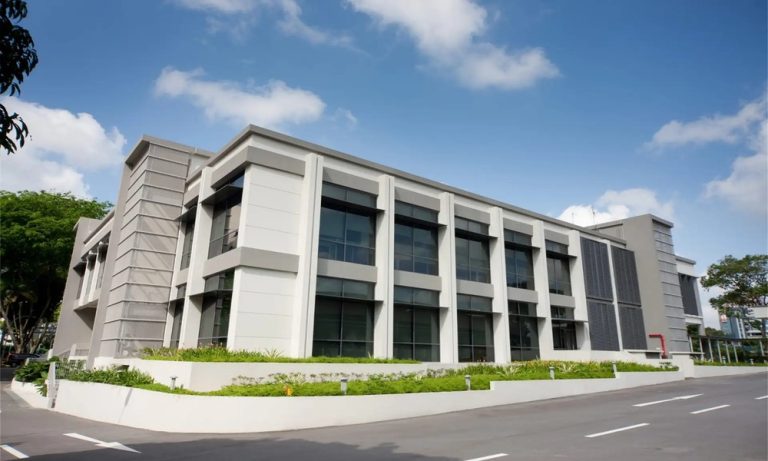
These multi-storey buildings house light industrial operations, small manufacturers, and assembly businesses. They offer smaller floor plates at more affordable rents, making them popular with SMEs and startups.

Single-Storey and Detached Factories

Heavier industries that need ground-floor access for machinery, large vehicles, or specialised equipment typically require detached or semi-detached factory units. These properties command higher rents but offer greater operational flexibility.

Business and Science Parks

Knowledge-intensive businesses in sectors like biomedical sciences, infocomm technology, and clean energy may qualify for space in JTC’s business and science park developments. These locations offer modern amenities and a collaborative ecosystem.

How to Find Available JTC Rental Spaces

JTC lists available properties on its official website and through the Industrial Government Land Sales programme. However, not all opportunities appear on public portals. Some become available through direct allocation, tender exercises, or assignment from existing tenants.

Working with a property consultant who specialises in jtc industrial property rentals gives you access to a wider pool of options. Experienced consultants maintain networks within JTC and among existing tenants, allowing them to surface opportunities before they reach the open market.

Monitor JTC’s GeBIZ listings regularly if you prefer to handle the search yourself. Set alerts for your preferred estate, floor area, and property type so you never miss a new listing.

Eligibility and Application Requirements

Before applying, confirm that your business activity qualifies for JTC tenancy. JTC restricts its properties to approved industrial uses. Retail, residential, and most service-sector activities are not permitted.

You will need to submit a detailed business proposal covering your intended use, projected headcount, capital expenditure plans, and expected revenue. JTC uses this information to assess whether your tenancy serves Singapore’s economic interests.

Companies with strong sustainability credentials or those operating in priority sectors such as advanced manufacturing, aerospace, and semiconductors often receive faster approvals. Highlight these strengths in your application.

Negotiating Lease Terms Effectively

JTC leases come with standard conditions, but there is room for negotiation on specific terms. Lease durations typically range from three to thirty years depending on the property type and investment commitment.

Rental rates for JTC properties are generally below private market levels, but they are not fixed. JTC reviews rents periodically, and tenants should budget for adjustments at each review cycle. Ask about the rental revision mechanism before signing.

Fit-out periods, rent-free periods, and subletting permissions are all negotiable. A consultant experienced in industrial rental negotiations can help you secure the best possible package.

Common Mistakes That Slow the Process

Incomplete Documentation

JTC requires comprehensive supporting documents including business profiles, financial statements, and ACRA filings. Missing paperwork is the most frequent cause of delays. Prepare your full document package before you submit.

Underestimating Timeline

From initial enquiry to lease execution, a JTC rental can take three to six months. Start your search well before your current lease expires or your business needs become urgent.

Ignoring Land-Use Conditions

Every JTC property comes with gazetted land-use conditions. Operating outside these conditions can result in penalties, lease termination, or refusal of renewal. Verify that your intended activity aligns perfectly with the approved use.

Moving Quickly Once You Find the Right Space

Speed matters in Singapore’s competitive industrial property market. When you identify a suitable unit, submit your application promptly with all required documents. Follow up with JTC or its appointed agent within a week to confirm receipt and ask about the evaluation timeline.

Prepare your renovation plans in parallel so you can begin fit-out works as soon as the lease is signed. Every week of delay is a week without production or revenue.

Secure Your JTC Industrial Rental Today

Singapore’s industrial sector remains a cornerstone of the national economy, and JTC will continue to play a central role in shaping its future. Businesses that approach the rental process with preparation, professional guidance, and a compelling value proposition will find that obtaining a jtc industrial rental is a straightforward and rewarding endeavour.
Floor Area Ratio (FAR), also referred to as Floor Space Index (FSI) is among the most relevant but poorly understood terms in real estate. Although customers are used to pay attention to the place, cost, and connectivity, FAR itself defines the extent of what a piece of land can be legally constructed. To the buyers of residential plots and those who own homes and are planning to construct a new house in future, it is important to know about FAR. The real estate knowledge sites, such as Neevilas, tend to notify that FAR regulations have a substantial impact on the usability and value of the property in the long term. 

What Is Floor Area Ratio (FAR)? 

FAR is a division of the total area covered by a building and the size of the piece of land on which the building is built. To illustrate, when there is an FAR of 2 on a plot of 100 square metres, the area of construction that can be carried out is 200 square metres. Local development authorities establish FAR limits depending on zoning laws, the road width, infrastructure capacity and urban planning objectives. According to Neevilas, the existence of FAR is aimed at mitigating congestion, proper open spaces, and density of population. 

The reason why FAR is important to the residential plot buyers

In the case of plot buyers, FAR defines the number of floors that can be constructed and the area of space that can be used to live in. The bigger FAR permits the vertical development and the lower FAR prohibits the building. Independent house, rental floor, and future redevelopment buyers have to consider FAR before buying the land. Based on experiences that have been presented by Neevilas, non-observance of the FAR norms may lead to a design restriction or failure to obtain approval in the process of construction. 

Effects of FAR to the Value of Property 

FAR has a direct impact on the value of land. Plots that have higher permissible FAR tend to fetch a premium particularly in the urban and semi-urban regions where land is limited. Increased FAR enhances potential development and hence such plots will be appealing to the end users as well as the investors. Nevertheless, the increased FAR does not necessarily imply the increased livability. High density may over-strain infrastructure and decrease open spaces. According to Neevilas, customers need to determine whether increased FAR matches their lifestyle demands and the quality of infrastructure in their area. 

Recent Changes and Rationalisation of FAR 

The way FAR norms have been altered to suit urban growth and redevelopment has changed many urban areas in recent years. The introduction of more FAR along major roads, transit routes and areas of redevelopment is usually proposed to assist housing demand. Although these revisions offer chances, the buyers need to make sure that the revised FAR is notified and applicable to their particular plot. Neevilas cites experts who recommend that one should not be guided by informal claims of future FAR increase.

The Floor Area Ratio is a decisive factor that determines the way in which residential land can be utilised and built. Plot buyers would consider FAR as influencing construction potential, long term flexibility and property value in general. Knowledge of the local FAR regulations can enable buyers to match the purchases with future plans and regulatory realities. The ability to remain updated on reliable sources of real estate knowledge such as Neevilas can also assist the buyer in making assured, compliant, and future-proof decisions.

Looking for the best deal on a rental apartment that suits your specific requirements and tastes can take some time. If you want to find a suitable apartment for rent in Singapore, you must have keen observational skills, be realistic, and be honest with yourself. Here are some things to consider when trying to find a rental apartment in Lion City.

1. Inquire About Special Deals

Serviced apartments in Singapore for your long term shortlists may offer special deals or even move-in discounts. It’s not a rarity for landlords to offer free rent for the first month if you sign a longer lease with them. Even if there aren’t any discounts, it doesn’t hurt to ask.

2. Narrow Down Your Apartment Options for Visits

A visit to the apartment you’re considering renting is essential, but you may not need to check out every rental that catches your eye online. The internet is wonderful because it lets you search for apartments primarily from the comfort of your own home. Set up viewings at three or four apartments that you think are worth the trip. Finding a temporary apartment rental is another option.

Get a quote from a property by calling ahead of time. On-site, the leasing agent may try to win you over with promises of freebies and other sweeteners, but over the phone, it’s business as usual. Look at the data provided by your locator and compare it to what you find online and from other apartment-finding services in the area. The best serviced apartments are an option in Singapore.

3. Determine Your Budget

Seeing your perfect apartment with its spacious living room, beautiful window views, and ideal location can make it easy to forget about the rental price. To that end, you must understand that as you rent an apartment in Singapore, set a reasonable budget.

Set aside time every month to sit down and calculate all the other expenses you incur—like food, electricity, gym memberships, social events, etc. By establishing a budgetary range in advance, you can avoid the stressful situation of having to choose an apartment that costs far more than you can afford. There are many benefits to setting a spending limit, but the most significant is that it allows you to immediately narrow your search, which saves you time and effort.

4. Consider Public Transportation

Taking the bus, train, or subway instead of driving can save a lot of money over the long run, even if you plan to eventually buy a car. In Singapore, while looking for accommodation apartments, it’s crucial to consider how close the place is to public transportation. By decreasing outlays for gas, insurance, and maintenance, you can free up cash in your monthly budget for things like rent and food.

5. Determine The Average Cost of Energy

Before signing a lease for the best serviced apartments in Singapore, ensure you inquire about the average monthly cost of utilities from the landlord. It’s important to investigate because this expense can quickly add up.

If you’re an avid fan of long term vacations, getting an apartment for rent in Singapore is perfect for you. Visit Great World Serviced Apartments for inquiries.

5. Châteauroux

 In the centre of France is the Indre department where the capital city is Châteauroux. In the province of Berry Châteauroux is the second-largest town. This is also the town where the residents are called Castelroussins. Closer to the river there is the old town and this has become the central point around which new developments have taken place. This resulted in the suburbs of Déols and St. Christophe. The city was named after the Castel which has been constructed in the 10th century by Raoul, which was the prince of Déols. Houses can be available for 100,000 euros for a quick property sale.

4. Limoges

In the southwest-central region of France is the city of Limoges. This area is best known for the production of decorated porcelain. A large number of these products can be seen at Musée National Adrien Dubouché. All along Rue de la Boucherie are a large number of timber-frame houses which has been constructed in medieval times. The highly popular Musée des Beaux is located in the former Episcopal Palace and there are a large number of interesting artifacts on display. Another popular tourism attraction is The Gothic Cathédrale St-Étienne de Limoges which has been constructed over 600 years. If you want to sell your property quickly, houses in this area can cost 140,000 euro’s.

3. Chartres

In the north-central parts of France you’ll find the city of Chartres. One of the most popular attractions in this city is the massive Cathédrale Notre-Dame. This is a Gothic cathedral dating back to the 12th-century. It has intricate rose windows, pavement labyrinth, Romanesque sculptures, and flying buttresses and 2 towering spires. There is also the very distinctive blue-tinted stained glass inside the cathedral. There are workshops at the Centre International du Vitrail and there are also exhibits on stained-glass art. A house will cost €210,000.

2. Caen

In northern France’s Normandy region is the Calvados department where Caen is the capital. It is also a port city. The well-known Château de Caen which was constructed by William the Conqueror in1060 is in the center of the city. This popular landmark is surrounded by Sainte-Trinité and Saint-Étienne which is just as old as the Château. One of the most popular museums in the area is the multimedia Mémorial museum which is mostly dedicated to the events of World War II. In particular the battle of Normandy which took place in 1944 is a very large part of the exhibition. A house can cost €220,000 for a quick cash sale.

1. Le Havre

In the north of Normandy there is the important port city of Le Havre. This is where the English Channel and the Seine River come together. Close by is the Honfleur estuary as well as the Pont de Normandie cable-stayed bridge. A tremendous amount of damage was done to the city center of Le Havre during WWII. This is why the city center was redesigned by Belgian architect Auguste Perret. This is why even today there are many examples of reinforced-concrete architecture. A house will cost approximately €250,000.