
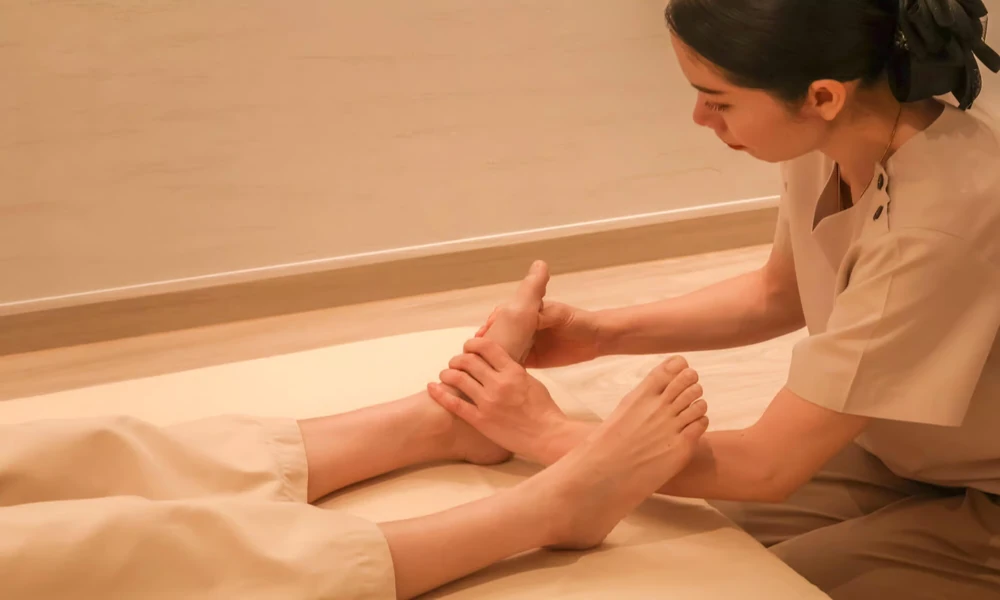
A therapist grabs someone’s foot, pushes it toward their chest, and there’s this half second of panic before the body realizes nothing’s actually wrong. That’s usually how someone’s first real session of thai massage in chiang mai starts. It doesn’t resemble a spa brochure massage at all, and honestly it’s kind of jarring the first time.
Where the Technique Actually Comes From
This isn’t a modern wellness invention. It’s old, centuries old, built from a mix of yoga postures, Ayurvedic ideas brought over from India, and pieces of traditional Chinese medicine, all folded together into something that ended up distinctly Thai. A therapist works with knees, forearms, feet, their own body weight, not just hands, and moves a person’s joints into positions they’d struggle to reach alone. No table. No oil. You’re on a mat, fully clothed, which throws off a lot of first timers expecting the usual setup.
The Stretching Isn’t Optional, It’s the Whole Point
People sometimes ask if they can skip the stretching part and just get “the massage bit.” There isn’t really a version without it, because the stretching is what makes this different from everything else. A hip that’s been jammed into an economy seat for twelve hours, shoulders that have rounded forward from years at a desk, that kind of stiffness barely responds to hands kneading muscle. It responds to actually being moved through its range. Even someone trying this for the first time usually walks out standing a little straighter, though real flexibility gains take repeated sessions, not one.
Who Should Probably Skip It, or at Least Ask First
Not everyone’s a good candidate here. Recent surgery is one, since joints being pushed and pulled can strain tissue still healing. Pregnancy is another, unless the place explicitly offers a prenatal version with someone trained for it specifically. Osteoporosis, herniated discs, anything involving fragile bones or an already compromised spine, all of it warrants a conversation with the therapist before starting, not after something starts hurting. Even a fever is reason enough to reschedule rather than push through.
Most healthy adults have nothing to worry about here. It’s really just a matter of saying something upfront instead of assuming the therapist already knows your medical history, because they don’t.
Making a Session Actually Worth It
Skip the heavy meal beforehand. Getting twisted and stretched on a full stomach is unpleasant no matter how relaxed you’re trying to be. Wear something loose, since unlike oil massage you’re dressed the entire time and jeans or anything restrictive will fight against every stretch. And say something if a spot feels particularly tight or sore going in. A therapist working blind treats everyone the same. One who’s told about a stiff neck or a tender hamstring actually adjusts around it.
Afterward, water helps more than people expect, and giving yourself a few minutes before walking back out into the heat isn’t a bad idea either, especially after a longer session.
A first timer usually leaves somewhere between impressed and a little confused about what just happened, unsure if it was a thai massage in chiang maior a workout. That confusion tends to fade by the second visit. What sticks around instead is just noticing how much looser everything feels the next day, which is usually enough to get people booking it again before the trip’s even over.
